Roof Leak Repair After Hail: A Dallas–Fort Worth Homeowner's Guide
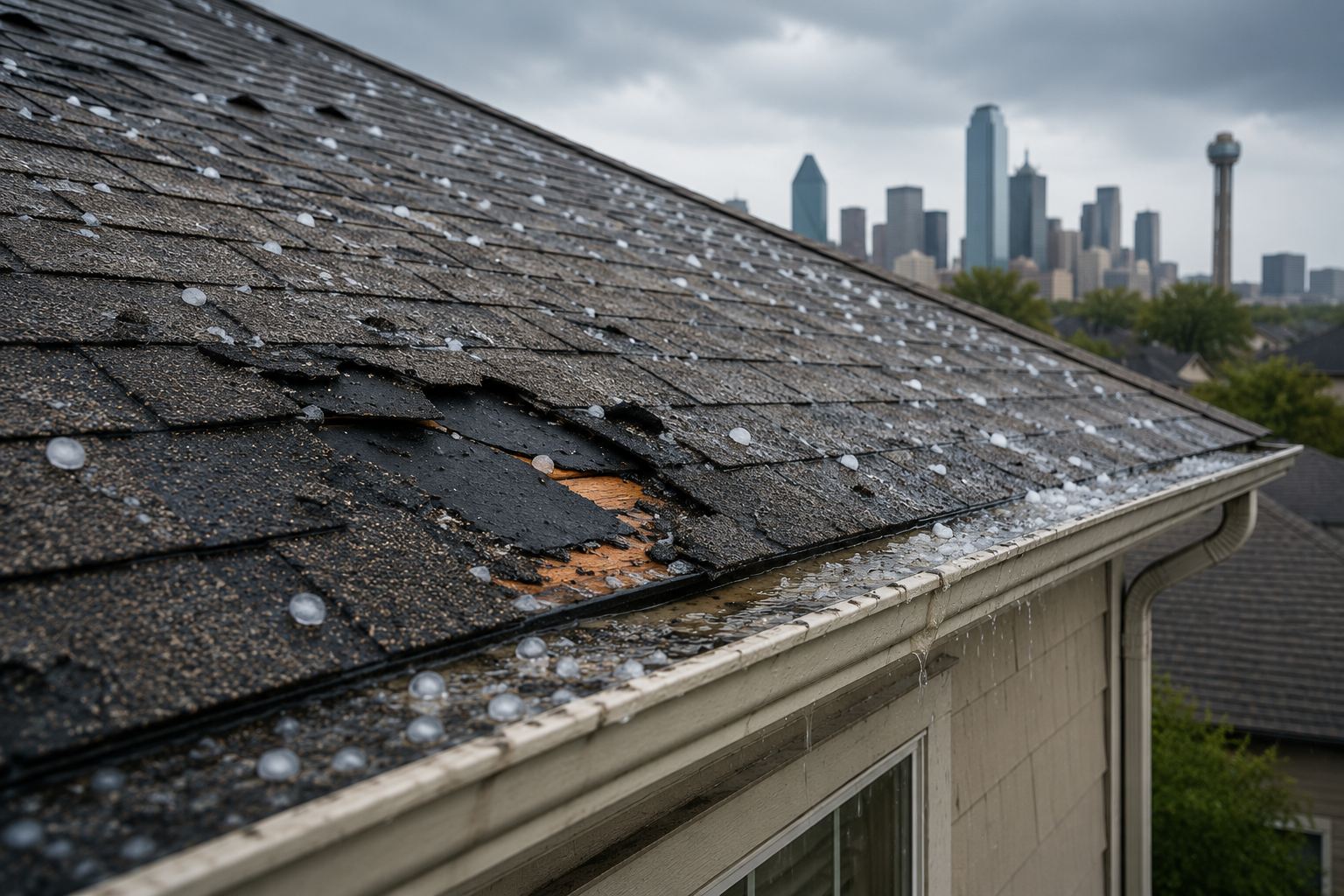
North Texas sits in the heart of "Hail Alley," and a single storm can turn your roof into a leaking liability. Here is how to spot hail damage early, what to do first, and how professional roof leak repair protects your DFW home.
Why DFW Roofs Take a Beating
If you own a home in Dallas, Fort Worth, Plano, or Frisco, you already know: hail season is no joke. North Texas sits squarely inside what meteorologists call "Hail Alley," and the National Weather Service Fort Worth/Dallas office tracks severe storms capable of large hail across the region every spring and summer.
The damage adds up. Hailstorms cost Texas an average of more than $338 million in property damage each year, according to Texas hail damage statistics — and roofs take the brunt of it. The problem is that hail damage is often invisible from the ground, so a leak may not show up inside your home until weeks after the storm.
How Hail Damages a Roof
Hail doesn't always punch obvious holes. More often it does quieter, cumulative damage that opens the door to leaks:
- Bruised or fractured shingles that lose their protective granules
- Cracked or dislodged shingles that expose the underlayment
- Dented flashing and vents around chimneys, valleys, and pipe boots
- Granule loss that accelerates shingle aging and UV breakdown
- Compromised seals that let wind-driven rain work underneath
Each of these weakens your roof's ability to shed water. The next heavy North Texas downpour finds the opening — and the leak begins.
Warning Signs of a Roof Leak After Hail
Catching a leak early can save you thousands. After any significant hailstorm, watch for:
- Water stains on ceilings or upper walls — often a brown or yellow ring
- Dripping or active moisture in the attic, especially after rain
- Damp insulation or a musty smell in upper rooms
- Peeling paint or bubbling drywall near ceilings
- Granules collecting in gutters and downspouts (a sign of shingle wear)
- Daylight visible through the roof boards in your attic
If you see any of these, the underlying roof and the water it has let inside both need attention — fast.
What to Do First After Hail Damage
Acting quickly protects both your home and any future insurance claim. Here is your first-response checklist:
- Stay safe. Never climb onto a storm-damaged roof yourself. Wet, hail-battered surfaces are dangerous.
- Document everything. Photograph and video the damage — inside and out — before any work begins. The FEMA disaster documentation guidance stresses documenting damage thoroughly, with date stamps, before repairs start.
- Contain the interior damage. Move belongings, place buckets, and pull back wet items to limit secondary damage.
- Call a professional for emergency tarping. A proper roof tarp stops water intrusion while permanent repairs are arranged.
- Contact your insurer. Report the loss promptly and review your policy's roof and hail coverage.
- Get a qualified inspection. A certified restoration and roofing professional can identify damage an untrained eye — and sometimes an adjuster — will miss.
What Professional Roof Leak Repair Involves
When you call Americon Restoration after a hailstorm, our DFW team moves fast to stop the damage and restore your home:
1. Emergency Roof Tarping
We secure the roof to halt water intrusion immediately — often the most urgent step after a storm.
2. Water Damage Assessment
We inspect the attic, ceilings, and interior for moisture intrusion, because a roof leak is rarely just a roof problem.
3. Structural Drying
Using professional air movers and dehumidifiers, we dry framing, insulation, and drywall to prevent mold — which the EPA notes can begin growing within 24 to 48 hours of materials getting wet.
4. Roof Leak Repair and Restoration
We work with trusted partners to repair or replace damaged shingles, flashing, and underlayment to make the roof watertight again.
5. Interior Restoration
We repair water-damaged ceilings, walls, and finishes so your home looks like the storm never happened.
6. Insurance Documentation Support
We document the full scope of damage to support your claim from start to finish.
Hail Roof Repair Costs in Dallas–Fort Worth
Costs depend on the severity of the hail, the size of your roof, and how much water made it inside. Here's a general planning guide for DFW homeowners:
- Emergency roof tarping: $300 – $1,200, depending on roof size and access
- Minor shingle and flashing repair: $400 – $2,000
- Moderate roof leak repair with interior water damage: $2,000 – $6,000
- Extensive repair with structural drying and reconstruction: $6,000 – $15,000+
- Full roof replacement (severe hail): Varies widely by material and size
These are general estimates for planning purposes. Every storm and every home is different — we provide a clear, written assessment before any work begins, and we work directly with your insurance.
How Americon Restoration Protects DFW Homes
Americon Restoration has been family-owned since 1912, and we bring that legacy of trust to every roof and every home across North Texas. Our 24/7 emergency response team serves Dallas, Fort Worth, Plano, Irving, Garland, Frisco, Arlington, and the surrounding communities with the white-glove service your home deserves.
When hail hits, every hour counts. We tarp, dry, repair, and restore — and we stand with you through the insurance process so you are never facing the storm alone.
Call our Dallas–Fort Worth team 24/7 at 214-984-3257.
Learn more about our Dallas–Fort Worth restoration services.
Frequently Asked Questions
How soon after a hailstorm will a roof leak show up?
It varies. Some leaks appear during the next rainfall; others develop over weeks as compromised shingles fail. That's why a post-storm inspection matters even if you don't see immediate damage.
Is hail roof damage covered by insurance in Texas?
Most Texas homeowners policies cover sudden hail damage, though deductibles and roof-age provisions apply. Documenting the damage immediately — before repairs — strengthens your claim, as FEMA guidance emphasizes.
Can I just wait and see if the roof leaks?
Waiting is risky. A small opening lets water into framing and insulation, where it can cause rot and mold. The EPA notes mold can start within 24 to 48 hours of materials getting wet.
Should I get on the roof to check for hail damage myself?
No. Storm-damaged roofs are slippery and unstable. Leave inspections to trained professionals with the right safety equipment.
Why does North Texas get so much hail?
DFW sits in "Hail Alley," where warm, moist Gulf air collides with cooler air to fuel severe thunderstorms — making large hail a frequent spring and summer threat, per the NWS Fort Worth/Dallas office.
Don't let hail damage become a costly interior disaster. Americon Restoration is ready 24/7 to protect your Dallas–Fort Worth home. Call 214-984-3257 today.